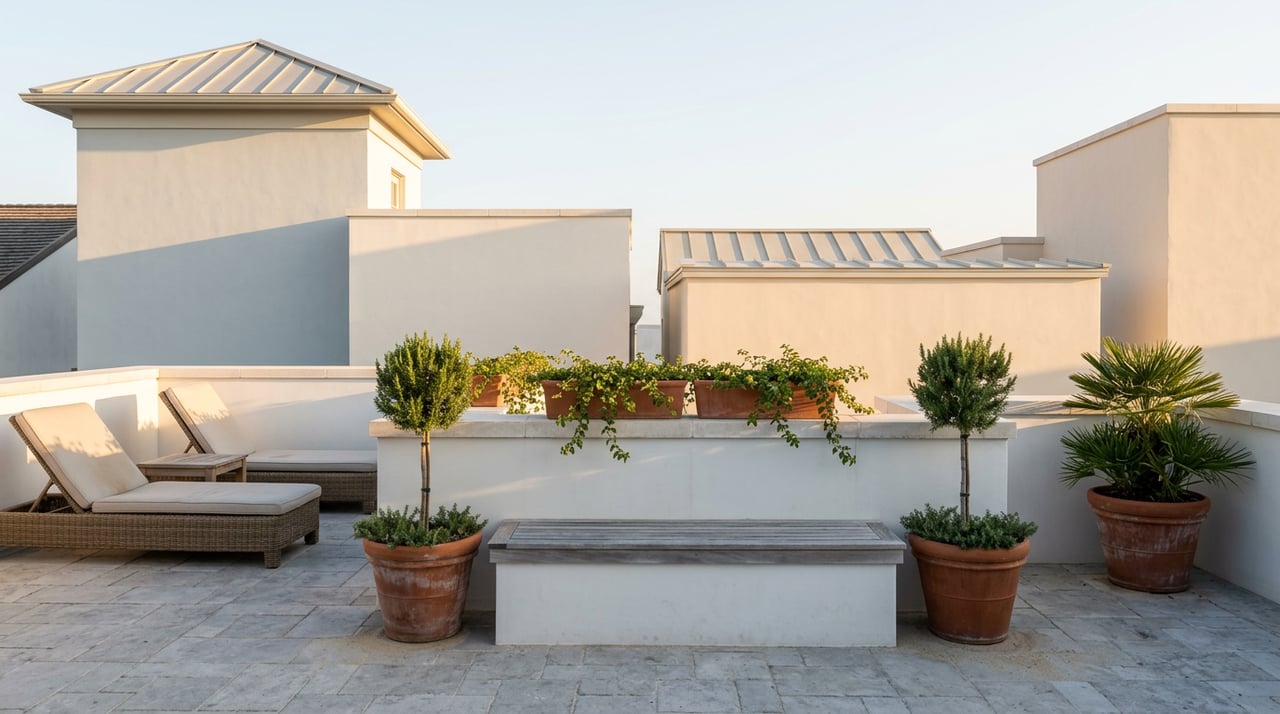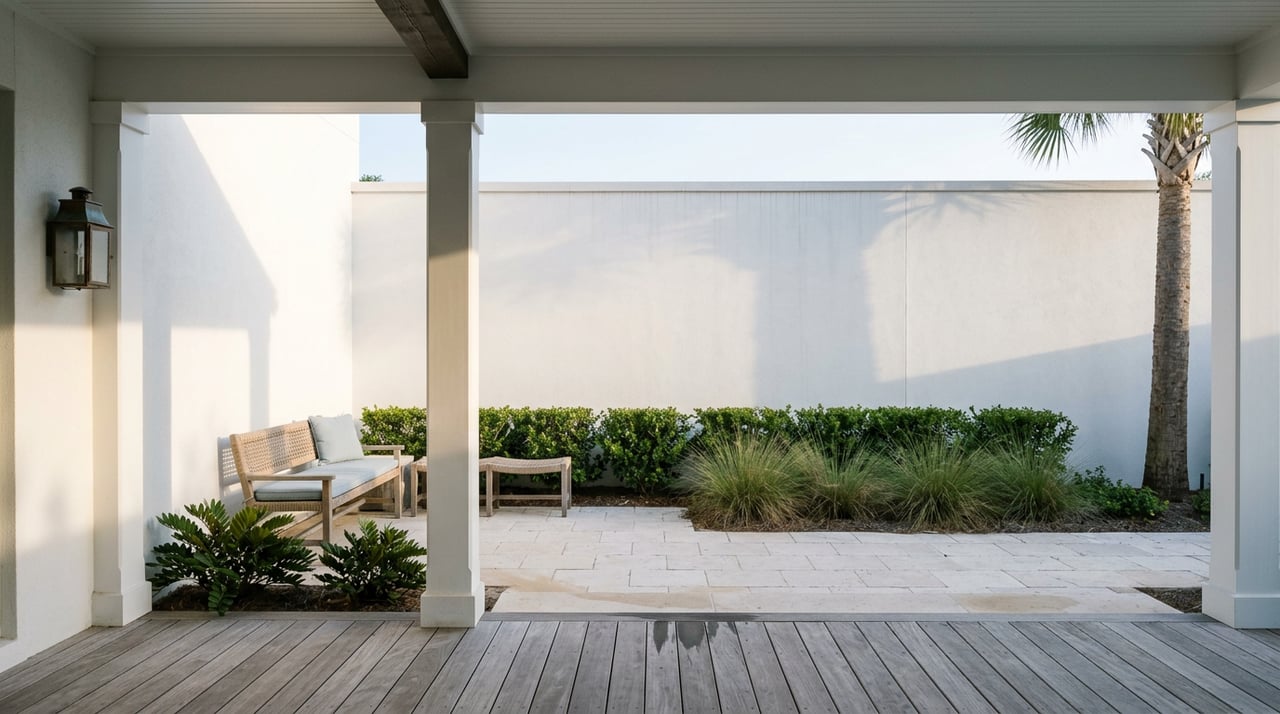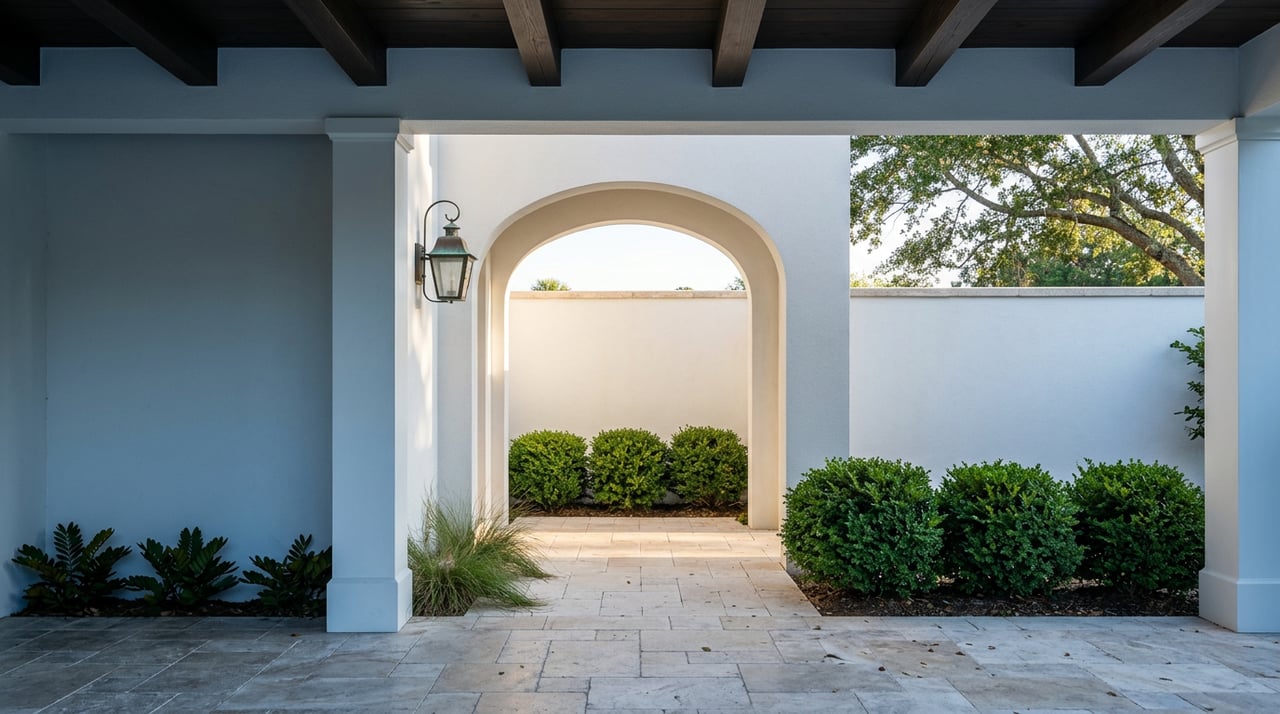
A buyer touring Rosemary Beach this month will likely see two homes on the same day, both listed as "Rosemary Beach," both roughly the same square footage, priced hundreds of thousands of dollars apart with no renovation, view, or condition difference to explain it. The confusion is understandable. It is also the wrong reaction. The gap is not a pricing error. It is the town working exactly as its plan intended.
Rosemary Beach was built on 107 acres starting in 1995, the second Traditional Neighborhood Development to rise along 30A after Seaside, designed by the same firm, Duany Plater-Zyberk & Company. Every home in town follows one of twelve base building types set by the community's design code, which is why the streetscape reads as one composition instead of a patchwork. What the code does not erase is the highway itself. Scenic Highway 30A runs directly through the middle of the community, and that two-lane road does more to set a home's price than almost any other single fact about the property.
The Line Is a Road, Not a Rumor
North of 30A, Rosemary Beach opens onto a long grass park ringed by scrub oaks, ending at a fountain that draws every child within sight. A U-shape of shops, restaurants, the town's bookstore, and the rental and real estate offices wraps around that park. Behind the commercial strip sit the larger homes, carriage houses, pocket parks, and the homeowners' clubhouse.
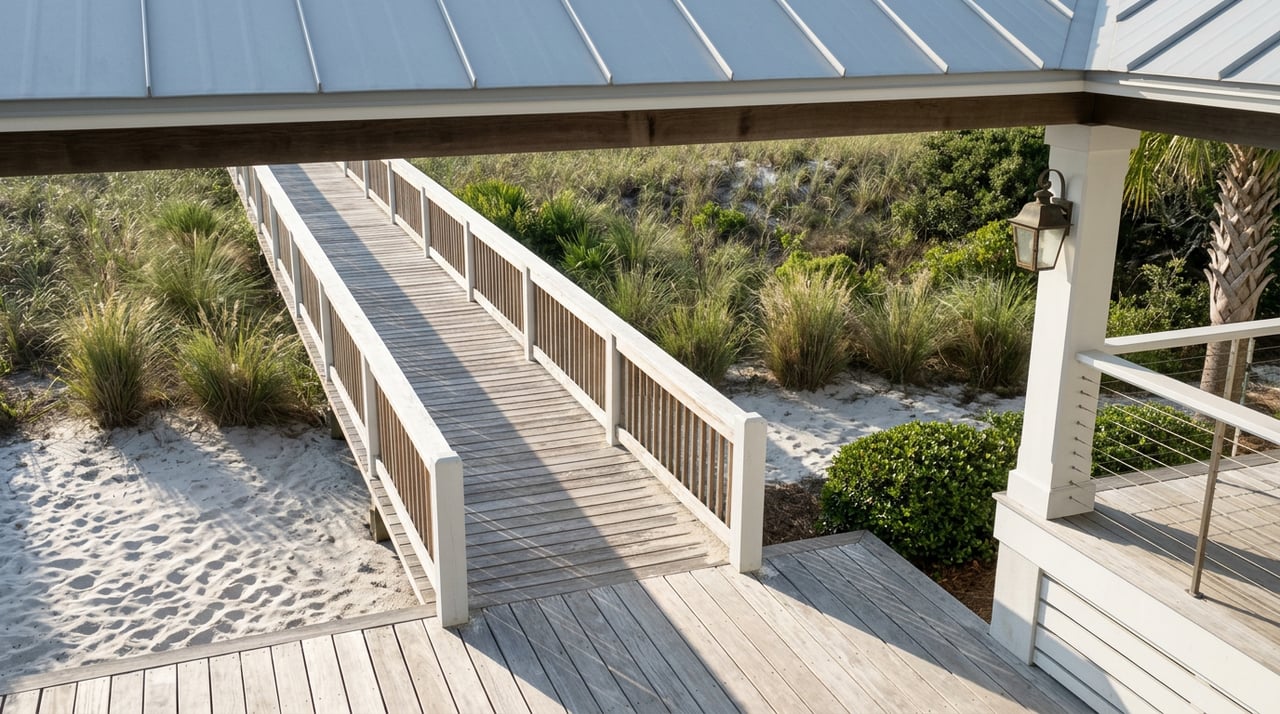
South of 30A, the layout repeats with a difference that matters. Another grass park, again ringed by scrub oak, again framed by a U-shape of restaurants and boutiques, this time ending at a bright green lawn and a beach walkover. Beach access here is reserved for Rosemary Beach owners and their overnight guests. Beyond that lawn are the rental homes, pocket parks, and walkovers that put the Gulf within a short, flat walk.
Cross the highway from north to south and the walk to sand goes from a bike ride or a highway crossing to a few unhurried minutes on foot. That difference in seconds and steps is a large part of what separates the two price bands buyers run into on the same afternoon.
What the Median Is Actually Averaging
A live snapshot of Rosemary Beach listings taken September 13, 2026, showed 85 active properties, a median list price of $1.8 million, an average of 131 days on market, and an average price of $1,154 per square foot. A separate read of the same town from August 2026, just weeks earlier, showed a median list price of $2.74 million and a median of 178 days on market.
Two snapshots, taken weeks apart, describing the same 107 acres, and the medians land nearly a million dollars apart. That is not measurement error. When days on market run past four months in both reads, a handful of closings in either pocket can swing the median more than any real shift in value. A stretch where the closings skew toward the Eastern Green and beachfront row reports a very different "Rosemary Beach price" than a stretch where they skew toward North Rosemary Beach. The median is not wrong. It is describing whichever half of the town happened to trade that month.
The Four Pockets, and What Each One Is Actually Selling
Locals and longtime agents in the area tend to describe Rosemary Beach in four informal pockets rather than one town, and each one carries a different logic.
Barrett Square and the Town Center form the commercial heart, loosely modeled on the French Quarter, with condos stacked above storefronts along Main Street. Homes here trade quiet nights for the ability to walk downstairs into the middle of everything. Condos surrounding the Town Center have traded in the $1.5 million to $3.5 million range.
The Western Green corridor runs along the lawn at the foot of Main Street, where the shortest walk to the beach begins. This is the pocket buyers pay a premium for when the priority is minimizing the distance between the front door and the sand.
The Eastern Green and beachfront row sit at the highest price point in town, with direct Gulf frontage and views, near the Coquina Pool. Waterfront homes in this stretch have reached into the $15 million to $20 million range, well above the $5 million to $10 million more typical of the broader south side.
North Rosemary Beach occupies the residential streets on the far side of the highway, where lots run larger and streets run quieter. Homes here have traded in the $3 million to $6 million range, a meaningfully lower band than the south side, without giving up the short bike ride back to town center.
It is common for a modest cottage two blocks from the Western Green to outsell a considerably larger home on the north side of town. Square footage is not the variable doing the work. Proximity to the water and the town center is.
The town's landmarks track this same divide. The Pearl Hotel and its Havana Beach Bar & Grill sit on the south side near the beachfront row. The eight-foot Blue Dog sculpture, donated by the late artist George Rodrigue, stands on the linear green fronting 30A, changing color with the light. St. Augustine Park, with its interactive play fountain, hosts the Northwest Florida Ballet Company's outdoor Starlight Ballet each June and anchors the Flutterby Arts Festival each November, celebrating the monarch butterflies that pass through on their migration. None of these are exclusive to one side of the highway, but where a buyer lands relative to them shapes daily life as much as the deed does.
What This Costs You If You Compare Towns Instead of Pockets
| Rosemary Beach | Typical Price Band | Distance to Sand | What the Price Reflects |
|---|---|---|---|
| Barrett Square / Town Center | $1.5M–$3.5M (condos) | Short walk | Walk-out access to shops and restaurants |
| Western Green corridor | Upper end of $5M–$10M south-side band | Shortest walk in town | Minimal distance to primary beach access |
| Eastern Green & beachfront row | $10M–$20M | Direct frontage | Gulf views and beach ownership |
| North Rosemary Beach | $3M–$6M | Short bike ride or highway crossing | Larger lots, quieter streets, still inside the walkable core |
Two buyers can both say they are shopping in Rosemary Beach and be looking at effectively different markets with different comps and different timelines. That matters most for a buyer coming from outside 30A who has one number in mind from a portal search and assumes it applies evenly across the town. With days on market running well past four months in both current reads, this is not a market punishing patience. It is a market where the homework of picking the right pocket, not the fastest offer, determines whether the price makes sense.
For a buyer weighing Rosemary Beach against other 30A communities, the more useful question is not "what does Rosemary Beach cost" but "which of these four pockets matches how I actually plan to use the property." A family that wants to walk to dinner every night is shopping a different Rosemary Beach than a family that wants a quiet compound with room to spread out and a short bike ride to town when they feel like it.
FAQ
Does the highway divide affect every part of town the same way? No. Barrett Square trades quiet for convenience regardless of which side it sits on, since it functions as the commercial spine both north and south. The clearest price gap shows up between the Eastern Green and beachfront row on the south side and the residential streets of North Rosemary Beach.
Are north side homes still walkable to the beach? Yes. The walk or bike ride from North Rosemary Beach back to the town center and across to the beach access points is short by most standards. It is simply a different experience than stepping onto the Western Green and walking straight to the sand.
Is a lower price on the north side a discount, or a different product? It is a different product. North Rosemary Beach homes typically sit on larger lots with more separation between houses, which some buyers value over minimizing walk time to the water. The price difference reflects that tradeoff rather than any gap in construction quality or design review.
If you are comparing Rosemary Beach against other stretches of 30A, or trying to figure out which of its four pockets actually fits how your family will use the property, The Morar Group can walk the greens with you and translate the town's design code and price geography into a plan that matches your goals. Text or call us to start your 30A conversation.