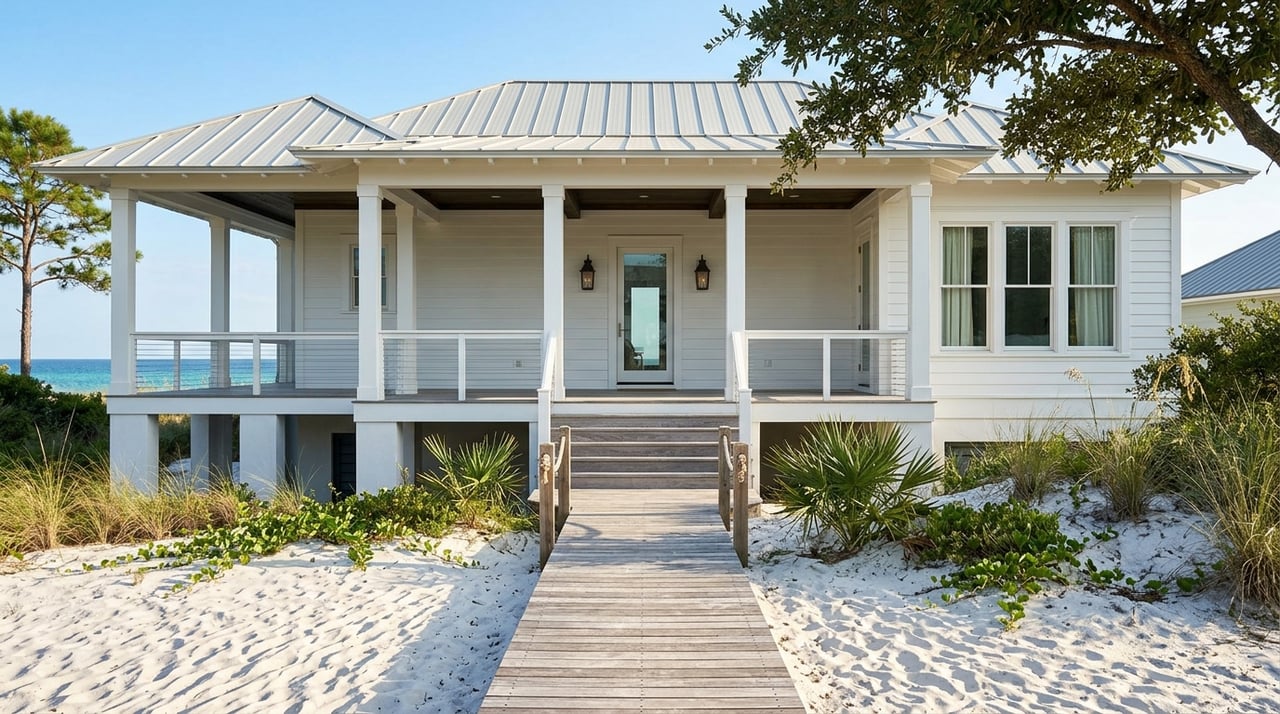
If you have ever wondered why two 30A Gulf-front homes with similar square footage can sell at very different prices, you are asking the right question. Along this stretch of Walton County coastline, value is rarely just about the house itself. It is shaped by scarcity, site constraints, design quality, amenity access, and how easily the property fits a buyer’s intended use. Let’s dive in.
Gulf-Front Value Starts With Scarcity
Gulf-front homes in 32461 do not behave like a typical residential market. They sit in a narrow, highly constrained slice of the 30A corridor where buildable land is limited and rules around dunes, vegetation, buffers, and coastal construction affect what owners can do over time.
That helps explain the wide pricing spread in this segment. For context, Florida Realtors reported a statewide April 2026 single-family median sale price of $420,000, while local reporting highlighted a Gulf-front Inlet Beach sale at $41 million in April 2026. On 30A, Gulf-front pricing is often driven more by rare coastal asset value than by simple square-foot comparisons.
Why Similar Homes Price Differently
Two homes can look close on paper and still carry very different value in the market. Buyers at the high end are often weighing the full property story, not just bedroom count, interior finishes, or gross living area.
In Gulf-front settings, the differences that matter most often sit below the surface. Lot geometry, dune conditions, design resilience, access rights, and amenity structures can create meaningful separation between one property and another.
Lot Width and Depth Matter
A wider or deeper Gulf-front lot can create more flexibility than a narrower site. Even when two homes offer similar interior square footage, the underlying lot may allow for better privacy, stronger view corridors, or a more functional outdoor layout.
That matters because Walton County setback requirements and protected-area rules can tighten the buildable envelope. In unincorporated Walton County, general single-family residential setbacks are 20 feet front, 7.5 feet side, and 15 feet rear, and protected areas in South Walton may include native vegetative communities, coastal dune lake protection zones, wetland buffers, and other restricted areas.
The Buildable Envelope Shapes Utility
Not every Gulf-front lot offers the same practical use. Once setbacks, native vegetation protections, dune rules, and buffers are applied, the usable portion of the site may be very different from what a casual listing comparison suggests.
Walton County coastal resource protection rules require preservation of existing native vegetation within setback and buffer areas. Natural dune vegetation within the overlay zone may be disturbed only as needed for boardwalks and related structures, with no more than 10 percent of existing vegetation or dune disturbed.
Beach Relationship Counts
In this segment, buyers often want clarity on a home’s exact relationship to the beach and dune line. A property’s access path, setback from sensitive areas, and the way outdoor spaces interact with the site can influence both enjoyment and future flexibility.
Florida’s Coastal Construction Control Line program also regulates structures and activities that could contribute to erosion, destabilize dunes, damage upland properties, or interfere with public access. In practical terms, a home with a cleaner, better-documented beach relationship may inspire more confidence than one with unanswered questions.
Design Quality Is More Than Cosmetics
On 30A, architecture often carries real market weight. Buyers are not only paying for high-end finishes. They are also paying for design coherence, long-term livability, and confidence that the home fits its coastal setting.
That is one reason certain communities along 30A place so much emphasis on architectural standards and planning. Seaside highlights a people-first design philosophy and walkable town fabric, Rosemary Beach emphasizes architectural harmony through strict urban codes and regulations, and Alys Beach presents itself as a carefully designed coastal community with substantial luxury amenities.
Renovations Do Not Always Add Durable Value
A fresh renovation can help a home show better, but that alone does not guarantee lasting value. In a Gulf-front environment, cosmetic updates matter less if they do not also improve resilience, maintenance burden, and overall construction quality.
For many buyers, the strongest renovations are the ones that pair aesthetics with durability. That can mean more confidence in materials, better protection against coastal wear, and a clearer sense that the property has been improved with the environment in mind.
Resilience Supports Buyer Confidence
FEMA’s coastal construction guidance notes that coastal buildings need materials and details that can endure flooding, wind-driven rain, corrosion, and decay. It also states that coastal homes require more maintenance than inland construction.
Walton County’s building requirements page likewise states that buildings in flood-hazard areas must be elevated. In a luxury purchase, resilience is not just a technical issue. It often affects how buyers think about future upkeep, insurability, and resale confidence.
Amenities Can Lift Value Significantly
On 30A, the house is only part of the lifestyle equation. Two Gulf-front homes may offer similar views, yet sit inside very different amenity ecosystems with very different owner experiences.
That distinction matters because buyers are often valuing daily convenience, beach access structure, walkability, and club privileges alongside the property itself. In some communities, those layers can materially influence what buyers are willing to pay.
Community Access Is Not Uniform
Alys Beach reports more than $100 million in luxury amenities, including an owner-exclusive Gulf-front Beach Club and a private 1,500-foot stretch of beach. Rosemary Beach emphasizes four private pools, a fitness center, guest access within the community, and an eight-court Har-Tru racquet club.
WaterColor’s Beach Club includes three pools, dining, Gulf views, and private beach access via a dune crossover, while resort materials note access to 10 resort pools across the property for guests staying within the resort or community. Watersound Club’s Beach Club includes two 7,000-square-foot pools, private member boardwalk access, beach chair and umbrella setups, dining, tennis, golf, and broader programming, with access varying by membership type.
Buyers Often Price the Full Ecosystem
When buyers compare Gulf-front options, they are rarely comparing homes in isolation. They are comparing what life looks like in each setting, including how the beach is accessed, what amenities are available, and whether guest or membership rules align with their goals.
That means a home’s value may rise or fall based on the surrounding framework. The same frontage can command different pricing if one property is paired with stronger owner benefits, more convenient access, or a more cohesive community experience.
Rental Appeal Expands or Narrows the Buyer Pool
For some buyers, a Gulf-front home is purely personal. For others, rental use is part of the ownership plan. On 30A, that distinction matters because rental compliance and operational ease can affect how broad the buyer pool becomes.
Walton County defines a short-term vacation rental as a unit rented more than three times in a calendar year for fewer than 30 days, or marketed that way, and annual registration is required. The county states that the initial and annual fee is $300 per property for individual registration, with the annual cycle opening June 1 and expiring May 31.
Not Every Gulf-Front Home Is Equally Rentable
Even when two homes appear similar, their rental appeal may differ. Community rules, access structure, parking logistics, and the owner’s ability to present clear compliance records can all influence how attractive the property feels to a rental-oriented buyer.
County FAQs also note that some owner-occupied, homesteaded primary residences are exempt from the county’s certification requirements. That is one more reason buyers and sellers need property-specific clarity rather than broad assumptions.
Visitor Demand Matters Locally
Rental demand is not a minor side note in Walton County. Walton County Tourism says the Tourism Department and beach operations are funded exclusively through the Tourist Development Tax collected on hotels, condos, and other short-term rentals.
Its 2024 tourism reporting states that the visitor economy generated almost $5 billion in economic impact, including more than $4 billion in direct visitor spending and close to 34,000 jobs. For investor-minded buyers and second-home owners, that reinforces how deeply visitor activity is woven into the local market.
What Sellers Should Highlight
If you are selling a 30A Gulf-front home, the most persuasive story is usually the clearest one. Luxury buyers want specifics that reduce uncertainty and help them understand why your property stands apart.
In this market, strong positioning often comes from showing the details that are harder to see in photos. The goal is to explain not just how the home looks, but why it holds value.
Key Details That Support Value
Sellers should be ready to present information such as:
- Exact lot geometry and Gulf-front relationship
- Dune and native vegetation condition
- Elevation and flood-related documentation
- Permitted renovation history
- Amenity access or membership structure
- Rental registration status and documented rental performance, if applicable
- Parking and arrival logistics
For premium coastal listings, clarity can be a competitive advantage. A well-prepared seller package helps serious buyers move from admiration to confidence.
The Bottom Line on 30A Gulf-Front Value
What really drives value in 30A Gulf-front homes is not one feature. It is the combination of scarcity, site quality, coastal resilience, architectural execution, community context, and use-case fit.
That is why simple comp-based pricing can fall short in this segment. Whether you are buying or selling in Walton County’s Gulf-front market, the strongest decisions usually come from understanding the full asset, not just the headline square footage.
If you want a clear, property-specific read on what is driving value in your stretch of 30A, The Morar Group offers senior-broker-led guidance built around local market knowledge, thoughtful positioning, and high-touch service.
FAQs
Why can two 30A Gulf-front homes with similar square footage have very different prices?
- Because value often depends on lot width, depth, protected buffers, dune conditions, design quality, amenity access, and rental or ownership flexibility, not just interior size.
Does renovating a Gulf-front home in Walton County automatically increase value?
- No. A renovation tends to create more durable value when it improves resilience, maintenance profile, and overall design quality, not just appearance.
Do all Gulf-front homes in 32461 have the same rental potential?
- No. Walton County registration requirements, exemption categories, community rules, amenity structures, and operational factors like parking can all affect rental appeal.
What site factors matter most for 30A Gulf-front home value?
- Lot geometry, setback constraints, protected vegetation, dune preservation rules, and the practical buildable envelope are all important.
What should sellers emphasize when listing a Gulf-front home on 30A?
- Sellers should clearly present the home’s beach relationship, elevation and flood documentation, permitted improvements, amenity access, and any documented rental performance.
Why do amenities affect Gulf-front pricing in 30A communities?
- Because buyers often value the full ownership experience, including private beach access, pools, club benefits, walkability, and guest-access rules, alongside the home itself.