If you have ever wondered why Rosemary Beach feels so different from a typical beach neighborhood, the answer starts with design. This is not just a collection of homes near the Gulf. It is a carefully planned, walk-first town where streets, porches, parks, and public spaces shape how you move, gather, host, and unwind every day. If you are considering buying, selling, or simply learning how the community works, understanding that design framework gives you a much clearer picture of life here. Let’s dive in.
Rosemary Beach Starts With Design
Rosemary Beach was planned as a New Urbanist town, not a conventional coastal subdivision. In simple terms, that means the community was designed around walkable streets, nearby shopping and dining, and public spaces that connect daily life.
That planning shows up in the town’s overall scale and structure. Publicly available information describes Rosemary Beach as a roughly 105 to 107-acre community developed with about 800 units and approximately 55,000 square feet of retail space. The result is a compact, highly regulated town where daily routines were meant to happen with less dependence on cars.
The community’s design code is also a major part of the story. Exterior design, landscaping, and site planning are guided by a formal code and review process, which helps preserve a consistent look and feel throughout the town.
Walkability Shapes Daily Routines
One of the clearest ways design affects everyday living in Rosemary Beach is how often you can get around on foot. The town presents itself as a place where most destinations are about a five-minute walk from anywhere inside the community.
That changes the rhythm of the day. Instead of driving for a coffee, a meal, or a quick errand, you are more likely to use pathways, boardwalks, cobblestone streets, and green spaces to get where you need to go. For many owners and guests, that walkable layout becomes one of the most memorable parts of the experience.
This design also shifts attention away from traffic and toward shared public life. The town center includes access to restaurants, shops, parks, Town Hall, and the Post Office, all arranged to support a more connected, pedestrian-oriented routine.
What Less Driving Really Means
Inside Rosemary Beach, you may find that driving becomes less necessary for short daily outings. If you are staying within the community, many essentials for leisure and convenience are intentionally close together.
That does not mean cars disappear. It means the town was designed so vehicles play a quieter role in the background, while walking takes the lead in the foreground.
Architecture Changes How Homes Live
The architecture in Rosemary Beach is not just about appearance. It directly affects parking, privacy, and how homes function for owners and guests.
A key feature is the rear-alley system. Cars are generally pushed to the back of homes through alleys, and the front of the house is often oriented toward porches, pathways, boardwalks, or green space instead of a wide driveway.
That creates a very different feel from a typical suburban neighborhood. When the front of the home is designed for people instead of parked cars, the street feels more social, more walkable, and more visually consistent.
Front Porches Matter Here
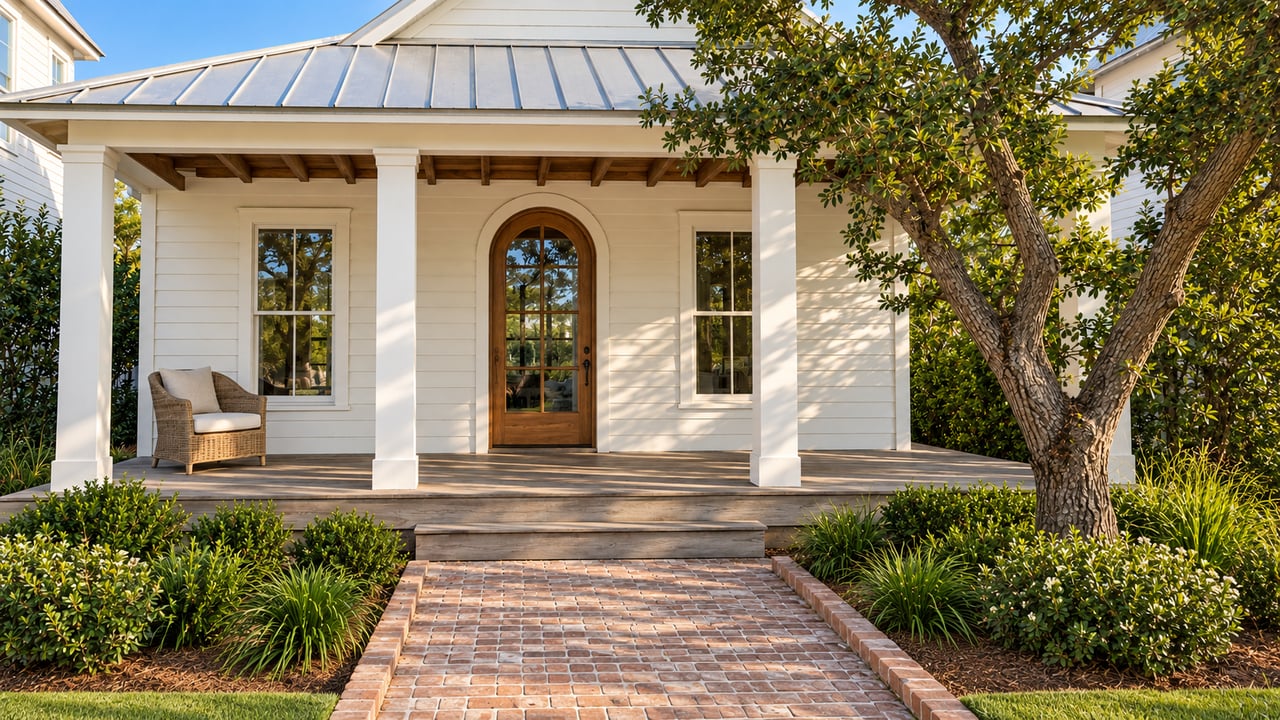
Because homes are street-facing and pedestrian-oriented, front porches become part of daily life. They are not just decorative features. They help connect private homes to the shared town setting.
For some buyers, that front-porch living is a major draw. For others, it is important to understand that this design can create more social exposure at the front edge of the property than you might expect in a driveway-centered neighborhood.
Carriage Houses Serve a Purpose
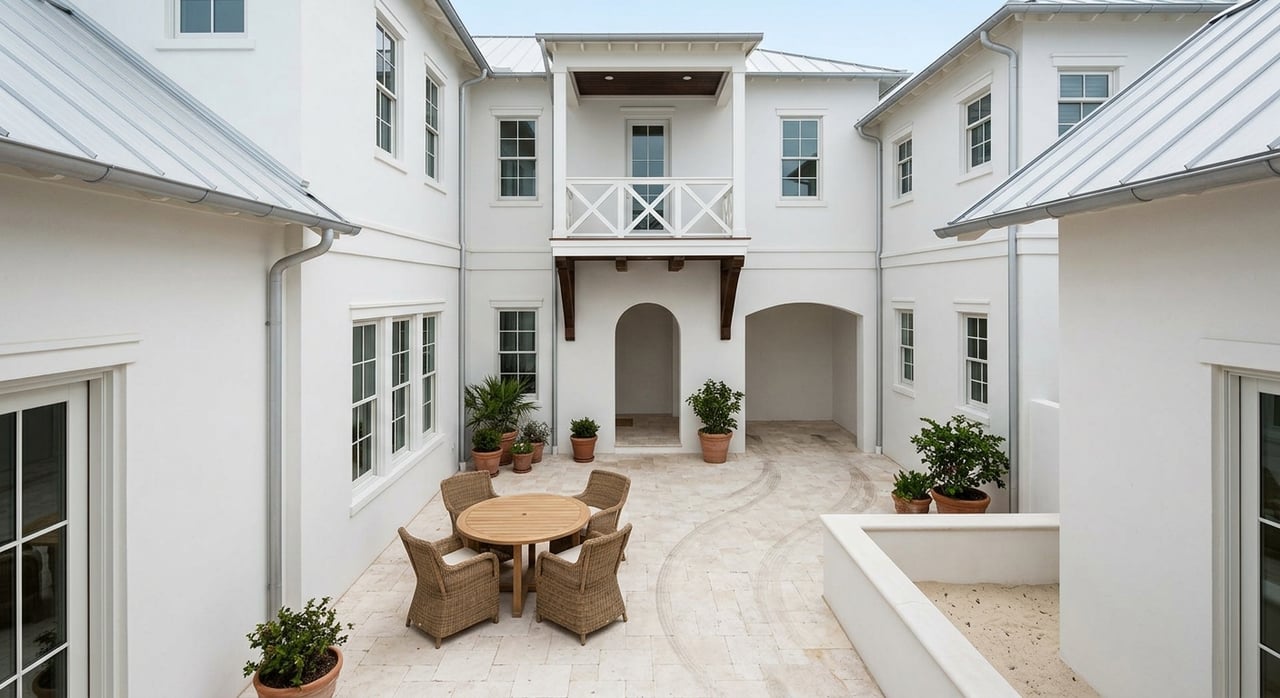
Carriage houses are one of Rosemary Beach’s most practical design features. The community’s public materials note that carriage houses were part of the town’s architectural approach from the beginning and can provide additional living space and rental opportunity.
That matters in real life. If you host extended family, need overflow sleeping space, or want a layout that supports second-home use, a carriage house can add flexibility beyond simple curb appeal.
Parking Takes More Planning
Because Rosemary Beach is designed around walking and rear access, parking tends to be more managed than casual. Public community resources reference town etiquette, parking guidelines, and maps, which signals that owners and guests should expect a more structured arrival experience.
In practical terms, that can mean thinking ahead about unloading, guest arrivals, and where multiple cars will go. If you are comparing Rosemary Beach to a neighborhood with broad front-drive parking, this is one of the clearest lifestyle differences.
For many owners, the tradeoff is worth it. The benefit is a streetscape that feels less cluttered by vehicles and more centered on architecture, landscaping, and pedestrian movement.
Parks Are Part of Daily Infrastructure
In Rosemary Beach, parks are not leftover green patches. They are built into the town’s everyday function.
The community includes a wide network of greens, squares, and smaller park spaces, including Eastern Green, Western Green, North and South Barrett Square, East and West Long Green Parks, Playground Park, and several smaller pocket parks. Public descriptions also note spaces such as Butterfly Garden, Fountain Park, and other shaded gathering spots with seating, fountains, and arbors.
That variety gives the town a layered feel. Some spaces are suited for walking or quiet breaks, while others host picnics, games, concerts, movie nights, and community gatherings.
Shared Spaces Support Community Life
When a town is built around many public gathering spaces, it changes how people spend time outside the home. You are not relying only on a backyard or private club setting. You also have access to a network of greens and plazas woven into the community plan.
For buyers considering long-term use, that matters. It means the design supports both casual everyday routines and a more active social calendar.
Pools and Wellness Are Spread Out
The same planning logic applies to amenities. Rosemary Beach has four community pools, each with a distinct setting and use profile.
Barbados Pool is described as French West Indies-inspired. Sky Pool includes a motorized roof and adult-only hours. Cabana Pool has a children’s section and an adjacent playground. Coquina Pool sits near the Eastern Green and the Gulf.
This layout gives owners and guests options instead of funneling everyone into one central clubhouse pool. Public materials also highlight a 2.3-mile fitness trail with four exercise stations, which shows that wellness is integrated into the landscape itself.
Some Amenities Are Owner-Only
It is also important to know that not every amenity is shared equally. The Owners’ Club includes a heated pool and bocce court, and it is reserved for owners.
That distinction is useful if you are weighing full-time use, second-home use, or rental strategy. Rosemary Beach includes both guest-friendly common areas and select owner-only spaces, so understanding that mix helps set realistic expectations.
Beach Access Is Organized by Design
Even the beach experience in Rosemary Beach is structured. Public information indicates that beach chair, umbrella, table, and watercraft rentals are available through the beach service, with access codes provided by the owner or rental provider.
Bonfires are also handled in an organized way, with permits and limits on group size. In addition, the town was planned with only two formal beach access points, which helps explain why beach access feels managed rather than open-ended.
For some people, that creates a smoother and more curated guest experience. For others, it is simply something to understand in advance so there are no surprises when hosting family or visitors.
The Main Tradeoff: Convenience Versus Curation
Rosemary Beach offers a very specific kind of coastal living. It trades some conventional suburban convenience for a more walkable, visually consistent, and highly managed environment.
If you value front-porch living, connected parks, pedestrian movement, and a strong architectural identity, that tradeoff may feel like a clear advantage. If you prefer abundant front-drive parking, more separation from passersby, or less structured guest access, the design may feel more deliberate than relaxed.
That is why understanding the town’s planning matters so much when you evaluate property here. In Rosemary Beach, design is not just aesthetic. It shapes how you arrive, move, gather, host, and experience the community every day.
If you are thinking about buying or selling in Rosemary Beach, working with an advisor who understands these details can help you evaluate fit, explain tradeoffs, and position a property more effectively in the market. The Morar Group offers local, high-touch guidance for buyers and sellers across 30A, with a clear understanding of how community design influences value and lifestyle.
FAQs
How walkable is daily life in Rosemary Beach?
- Rosemary Beach is designed as a walk-first community, and public town materials state that most destinations are about a five-minute walk from anywhere within the neighborhood.
How does parking work in Rosemary Beach for owners and guests?
- Parking is more structured than in a typical beach neighborhood because homes often use rear alleys and the community provides parking guidelines and maps, so owners and guests should plan ahead for arrivals, unloading, and multiple vehicles.
How do carriage houses function in Rosemary Beach homes?
- Carriage houses are more than an architectural detail because they can provide added living space and rental opportunity, which can be helpful for overflow guests, multigenerational stays, or second-home flexibility.
Which Rosemary Beach amenities are owner-only?
- The Owners’ Club, which includes a heated pool and bocce court, is reserved for owners, while many other parks, pools, and public gathering spaces are part of the broader community experience.
How does Rosemary Beach design affect privacy at home?
- Because homes often face pedestrian spaces and front porches instead of large front-drive areas, the front of the home can feel more social and visible, while cars and service access are generally pushed to the rear.
How is beach access managed in Rosemary Beach?
- Beach access is organized through formal access points, and services like beach chair setups and bonfires are handled through the community beach service with owner or rental-provider coordination.