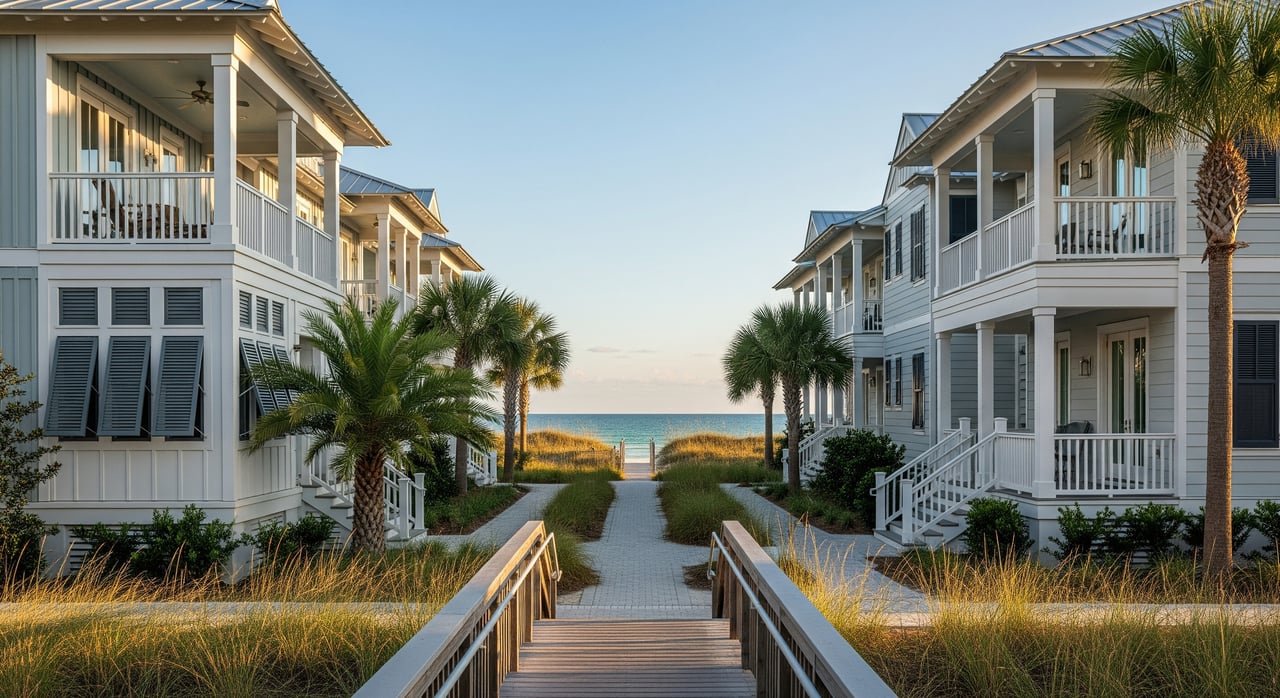
Thinking about a low‑maintenance beach place but not sure whether a condo or a townhome fits you best? On Florida’s Emerald Coast, both choices can work well, yet the ownership details can be very different. If you understand who owns the roof, who carries which insurance, and how rentals are handled, you can avoid costly surprises. This guide breaks down the key differences you will face as a buyer in Destin and Okaloosa County, with notes on how rules along 30A in Walton County can vary. Let’s dive in.
What a condo means in Florida
A condominium is a legal form of ownership. You own your individual unit and share ownership of common elements like the roof, exterior walls, amenities, and land through the association. Florida’s Condominium Act, found in Chapter 718 of the Florida Statutes, governs how these communities operate.
In practice, the association manages the building exterior and common areas, and you handle your interiors. The condo documents define these boundaries. Always read the recorded Declaration of Condominium, bylaws, and rules before you buy.
What a townhome means here
“Townhome” describes a building style, not a single legal form. In Florida, a townhome can be fee‑simple, where you own the land and structure, or it can be part of a condominium regime where it functions like a condo legally. If there is a standard homeowners’ association, Chapter 720 of the Florida Statutes typically applies.
Do not assume exterior responsibilities from the word “townhome.” Check the recorded plat and Covenants, Conditions & Restrictions to confirm who owns and maintains the roof, exterior walls, and yard. The documents control your costs and your freedom to modify.
Ownership and maintenance differences
Before making an offer, confirm who pays for which items. Start with these norms, then verify them against the specific documents:
- Condominiums
- Association usually covers the building envelope, roof, common mechanicals, landscaping, elevators, parking, and amenities.
- You are typically responsible for interior finishes, appliances, and sometimes in‑unit HVAC.
- Restrictions on exterior modifications are common, since exteriors are shared.
- Townhomes (fee‑simple)
- You often own and maintain the entire structure and roof. The HOA may handle only common areas, roads, and amenities.
- Some townhome communities still assign exterior care to the association. The CC&Rs tell the story.
- You may have more flexibility on exterior changes, with HOA approvals.
Financing and fees to expect
Lenders view condos and townhomes differently. For condos, underwriters look closely at the association’s finances, reserves, insurance, and any litigation. They may require project approval for certain loan types. Townhomes that are fee‑simple are often closer to financing a single‑family home, though HOA obligations still matter.
Monthly fees also differ by setup:
- Condo fees often include exterior maintenance, master building insurance, common utilities, amenities, and management.
- Townhome HOA fees usually cover common areas and amenities. Exterior items may or may not be included.
Ask for the last 2 to 3 years of budgets, reserve studies, and owner‑delinquency figures. Also check for any notices of special assessments. Coastal buildings face ongoing capital needs, so a strong reserve plan is important.
Insurance and coastal risk
Insurance is one of the biggest differences on the coast. You want to know what the association’s policy covers versus what you must carry.
- Condominiums
- The association typically carries a master policy for the building exterior and common elements. You carry an HO‑6 policy for interior finishes, personal property, liability, and loss assessment if needed.
- Wind and hurricane deductibles on the master policy can be large. Some bylaws allocate a share of deductibles or certain damages to unit owners. Review the policy declarations and bylaws.
- Townhomes (fee‑simple)
- You usually carry an HO‑3 or HO‑5 policy covering the full structure, your belongings, and liability.
- The HOA typically ensures common areas only.
Flood risk is a separate layer. If the structure or lot lies in a Special Flood Hazard Area, lenders will require flood insurance. Elevation, proximity to the Gulf, and building age influence premiums. Coastal markets can also see insurer availability shifts, with Citizens Property Insurance acting as an insurer of last resort in some cases. Ask a local agent for estimates based on the specific address and building details.
Rentals and local rules
Short‑term rental demand is strong across the Emerald Coast, but rules are local and layered. If you plan to rent, check three things before you buy:
- Association rules. Minimum rental periods, caps, or total bans may apply. Some communities require registration or approval.
- Local licensing and taxes. The City of Destin and Okaloosa County have their own business licensing and transient rental tax requirements. Along 30A in Walton County, rules and processes can differ from Destin. Verify the current requirements with the local authorities for the specific address.
- Insurance. Disclose rental use to your insurer. Some policies exclude or surcharge short‑term rental activity.
Taxes and homestead basics
Property taxes are assessed on each individual parcel or unit based on value. If you make the home your primary residence, Florida’s homestead exemption may reduce your taxable value. In Destin, you would file with the Okaloosa County Property Appraiser. Condo units qualify for homestead if they are your primary residence and you meet the filing rules.
Lifestyle and amenities
Your day‑to‑day experience will feel different in a mid‑rise condo versus an attached townhome. Condos often provide on‑site staff, pools, fitness centers, and elevators, which can mean higher dues but less hands‑on maintenance. Townhome communities may be smaller and more private, with direct entries and sometimes a small yard.
Noise, density, and shared spaces also vary. Multi‑story condos have more shared areas and neighbors. Townhomes often offer more separation. Your preference for amenities versus independence usually points you in the right direction.
Quick comparison checklist
Use this simple snapshot to frame your decision, then verify details in the actual documents.
Condo at a glance
- Ownership: Unit interior plus shared interest in common elements.
- Maintenance: Association manages exterior and common areas.
- Insurance: Association master policy plus your HO‑6 policy; watch deductibles.
- Fees: Often higher due to amenities, staff, and building systems.
- Rentals: Controlled by association rules and local licensing.
Townhome at a glance
- Ownership: Often fee‑simple, including land and structure, unless within a condo regime.
- Maintenance: You may handle roof and exterior; HOA manages common areas.
- Insurance: HO‑3 or HO‑5 for the full structure; HOA insures common areas.
- Fees: Often lower, depending on amenities and exterior responsibilities.
- Rentals: Controlled by CC&Rs and local licensing; rules vary widely.
Due diligence steps for buyers
Before you commit, collect and review these items. Your agent can help assemble them during the offer period.
- Recorded Declaration of Condominium or CC&Rs, plus the plat and any surveys.
- Bylaws and current Rules and Regulations.
- Association budgets, financials, and reserve study for the last 2 to 3 years.
- Recent association meeting minutes for the last 12 to 24 months.
- Written statement on special assessments, planned capital projects, and any litigation.
- Master insurance policy declarations and details on deductible allocation.
- Rental policy in writing, including any minimum stay and registration rules.
- Flood zone determination and any available elevation certificates.
- Local licensing and occupancy tax requirements for the specific address.
- Lender requirements for condo project approval if you need FHA or VA.
Destin vs 30A: what really changes
Many ownership and insurance concepts apply across the Emerald Coast, yet city and county rules drive key differences. Destin is in Okaloosa County. The 30A corridor lies in Walton County. Short‑term rental licensing, occupancy limits, and enforcement can vary by municipality and county. If you are comparing two properties, verify the rules and fees for the exact address and association. This is especially important for rental plans.
How to choose with confidence
Start with how you plan to use the property. If you value turnkey living with amenities and on‑site management, a condo may suit you. If you prefer more autonomy, direct entry, and possibly a small outdoor space, a townhome could fit. Then weigh insurance, reserves, and rental policies. Coastal ownership rewards thorough due diligence.
When you are ready to compare actual documents side by side, we can help you read the fine print and model carrying costs. For boutique guidance from senior brokers who know Destin, Okaloosa County, and 30A, connect with The Morar Group. Text or Call Us — Start Your 30A Conversation.
FAQs
What is the legal difference between a condo and a townhome in Florida?
- A condo is a legal ownership regime under Chapter 718 where you own your unit and share common elements, while a townhome can be fee‑simple under Chapter 720 or set up as a condo, so you must read the recorded documents to confirm responsibilities.
Who pays for the roof and exterior in Destin communities?
- In most condos the association handles roof and exterior, while in many fee‑simple townhomes the owner does; always verify in the Declaration or CC&Rs because some townhome HOAs still cover exteriors.
How do condo and HOA fees typically differ on the Emerald Coast?
- Condo fees often include exterior maintenance, master insurance, amenities, and management, while townhome HOA fees more often cover common areas and amenities, with exterior care varying by community rules.
What insurance do I need for a coastal condo or townhome?
- Condo owners usually carry an HO‑6 for interiors and loss assessment while the association covers the building, and fee‑simple townhome owners typically carry an HO‑3 or HO‑5 for the full structure; flood insurance may be required in certain zones.
Can I short‑term rent in Destin or along 30A?
- It depends on the association’s rental policy and local licensing rules, which differ between the City of Destin in Okaloosa County and Walton County along 30A, so check both the HOA/condo documents and local regulations for the specific address.
Is financing easier for a townhome than a condo?
- Often yes for fee‑simple townhomes because they are closer to single‑family homes in lender guidelines, while condos face project‑level reviews of reserves, insurance, and litigation that can affect loan options.
How does Florida’s homestead exemption work for condo units in Okaloosa County?
- If the condo is your primary residence and you meet the filing rules, you can apply for homestead with the Okaloosa County Property Appraiser to reduce taxable value, similar to fee‑simple homes.