Trying to choose between Seacrest and Miramar Beach for a condo investment? You are not alone. Both communities have strong rental demand, loyal repeat visitors, and distinct personalities that shape returns. In this guide, you will learn how the markets differ, what that means for price per square foot and rental performance, and how to match each location to your goals. You will also get a practical due diligence checklist and a simple way to run the numbers with confidence. Let’s dive in.
Seacrest vs. Miramar Beach at a glance
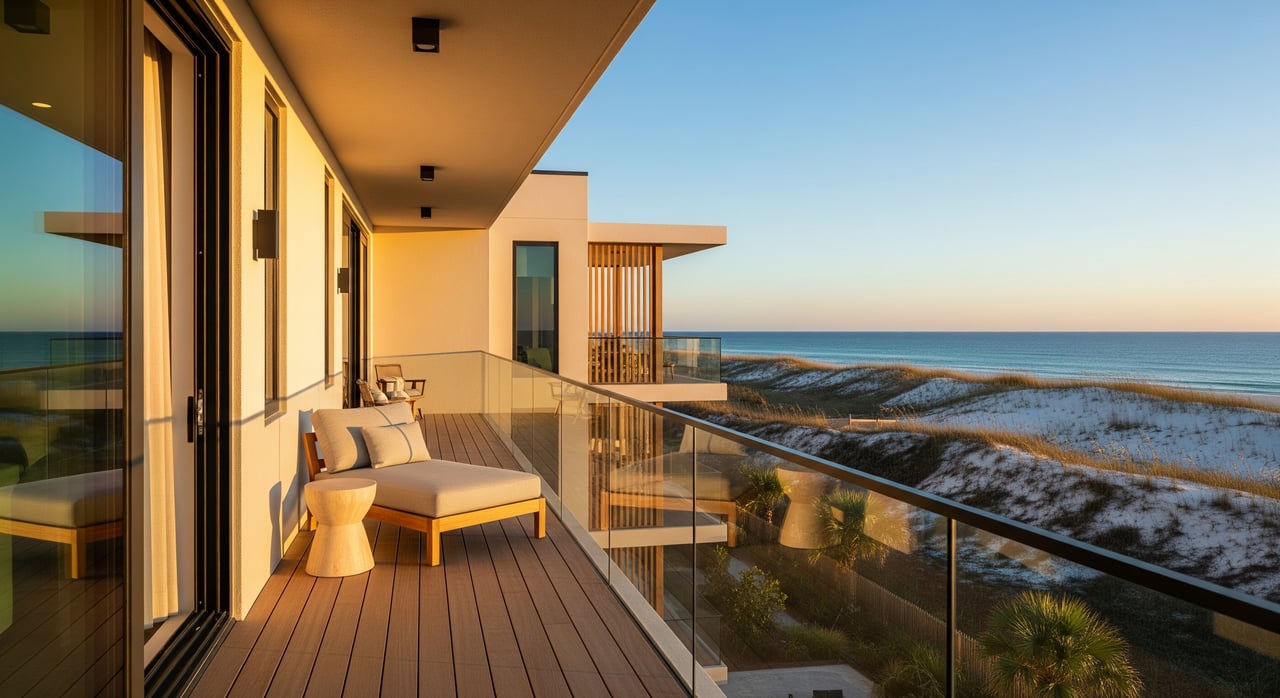
Seacrest sits along the prized 30A corridor between Rosemary Beach and Alys Beach. You will find boutique developments, design-forward architecture, and newer or recently renovated buildings. Inventory is limited and emphasizes quality, which often supports higher average daily rates for short-term rentals and a brand premium tied to 30A.
Miramar Beach, just east toward Destin and Sandestin, offers a larger scale with more resort-style and mid-rise condo options. Prices per square foot are often lower than 30A, and demand benefits from Destin’s year-round draw, outlet shopping, and family-friendly attractions. This diversity can translate to steady bookings for mid-market product.
What this means for you:
- Seacrest: Often best for premium short-term rental strategies and appreciation potential tied to the 30A brand. Expect higher entry prices and careful HOA standards.
- Miramar Beach: Often best for cash flow oriented strategies with broader demand and a wider range of resort-style buildings at lower price per square foot.
Price per square foot basics
Price per square foot helps you compare options across neighborhoods, but you must control for key variables. Beachfront or true gulf views price differently than inland or side-facing units. Recent renovations, floor level, parking, and amenity packages also weigh heavily.
How to compare accurately:
- Pull recent condo sales and similar active listings for Seacrest and Miramar Beach using local MLS data. Confirm living area and closing prices before calculating sale price divided by square footage.
- Compare like to like. Match bedroom count, building age, and beach proximity categories: direct beachfront, dune crossover or short walk, and near-beach.
- Analyze 6 to 12 months of sales to find median price per square foot for each area. Then compare to current active listing medians to spot trends.
- Cross-check square footage and parcel details in the county records. The Walton County Property Appraiser is a reliable source for parcel and assessment data.
When you do this work, the typical pattern is a premium for Seacrest, especially for boutique or luxury buildings close to the beach. Miramar Beach usually shows a discount per square foot and a wider range of options, which can improve yield on cash invested.
Rental demand and seasonality
Both areas share strong summer peaks from Memorial Day through Labor Day. Spring break and fall shoulder weeks also fill in many calendars. Seacrest’s 30A brand draws design minded travelers who will often pay higher rates for boutique experiences, while Miramar Beach benefits from the Destin area’s broader, family-oriented tourism base.
To calibrate your expectations, review these short-term rental metrics by month:
- Occupancy rate and average daily rate
- Revenue per available rental
- Booking lead times and channel mix
Use a specialized data source like AirDNA to track occupancy, ADR, and RevPAR curves by neighborhood. Compare peak season rates against shoulder and off-season and stress test your model for 10 to 20 percent swings in occupancy and 10 to 15 percent swings in ADR.
For wider regional context and events that influence demand, monitor Visit South Walton for travel patterns and seasonal attractions.
Regulations and requirements
Short-term rental rules can vary by building and community. In unincorporated Walton County, review county-level ordinances and then dig into the condo association’s governing documents.
Start here:
- County rules: Check the Walton County Code of Ordinances for licensing, occupancy, and operational requirements.
- Taxes: Review transient rental tax requirements through the Florida Department of Revenue. Confirm county tourist development tax obligations and reporting steps.
- HOA rules: Ask for rental restrictions, minimum stays, guest registration procedures, parking policies, and any platform or signage limits.
Professional property management for short-term rentals commonly runs 20 to 30 percent of booking revenue for full service. Confirm cleaning fees, supplies, and owner-paid utilities to avoid surprises in your net income.
Amenities and walkability
Amenities often drive rate premiums and repeat bookings.
Seacrest and the 30A corridor typically offer:
- Private boardwalks, dune crossovers, and pedestrian friendly layouts
- Boutique pools, curated landscaping, strict architectural standards
- Short walks to cafés and upscale dining
Miramar Beach commonly offers:
- Resort-style pools, fitness centers, and on-site or nearby restaurants
- Larger footprints, more parking, and easy access to retail like outlet shopping
- Buildings on or near Scenic Highway 98 with a mix of walkable and short drive dining options
Direct beachfront access commands the highest premiums, followed by short walk boardwalk access. Near-beach units can balance lower acquisition cost with appealing cash flow per dollar invested.
Investment fit by goal
Use these quick match-ups to narrow your focus.
Appreciation and boutique STR
- Best fit: Seacrest
- Why it works: Boutique, design-forward product and the 30A brand can support higher ADRs and long-term desirability.
- What to buy: Newly built or recently renovated 2 to 3 bedroom condos with upscale finishes and a short walk to the gulf via boardwalk.
- Key trade-offs: Higher entry price, seasonal concentration, and tighter HOA standards.
Cash flow focused STR
- Best fit: Miramar Beach
- Why it works: Broader mid-market demand, more resort-style options, and often lower price per square foot help yield metrics.
- What to buy: 2 bedroom mid-rise or resort condo with family-friendly amenities and easy access to Destin area attractions.
- Key trade-offs: Lower ADRs than 30A, more direct competition within the complex or nearby buildings.
Long-term rental or hybrid
- Best fit: Often Miramar Beach, sometimes either market depending on building rules
- Why it works: Predictable monthly income and lower turnover costs than short-term rentals
- What to buy: 1 to 2 bedroom units that appeal to year-round renters or corporate leases, preferably with convenient parking and ground-floor access
- Key trade-offs: Lower gross revenue than STRs, but simpler operations and fewer licensing complexities
Due diligence checklist
Before you write an offer, confirm the essentials:
- HOA bylaws and rental policies, including minimum stays and guest rules
- Recent HOA financials and reserve studies, plus any known or pending special assessments
- Flood zone, elevation certificate, and required flood insurance. Use the FEMA Flood Map Service Center to verify parcel risk.
- Insurance availability and cost, including wind and hurricane deductibles. For market conditions and carrier trends, consult the Florida Office of Insurance Regulation.
- Past rental history if available: occupancy by month, ADR, and net revenue for 12 to 24 months
- Parking allocations, storage rights, elevator and balcony maintenance records, and salt-air exposure items like HVAC corrosion
- Local permits, business tax receipts, and tourist development tax registration per county and state rules
How to run your numbers
A simple, consistent process helps you compare options in minutes.
Step 1: Estimate gross revenue
- Use month-by-month occupancy and ADR from a source like AirDNA or quotes from local managers.
- Model peak, shoulder, and off-season separately. Create a base case and sensitivity cases.
Step 2: Build your operating budget
- Include management, cleaning, supplies, utilities you will pay, HOA dues, maintenance, property taxes, insurance, and a capital reserve.
- Net operating income equals gross revenue minus all operating expenses.
Step 3: Calculate returns
- Cap rate equals NOI divided by purchase price.
- Cash-on-cash return equals (NOI minus debt service) divided by your cash invested, which includes down payment, closing costs, and initial improvements.
- Run sensitivities for plus or minus 10 to 20 percent occupancy and plus or minus 10 to 15 percent ADR to see your break-even and target ranges.
Step 4: Validate assumptions
- Cross-check square footage and parcel data with the Walton County Property Appraiser.
- Align your comps and per square foot assumptions with live MLS data and similar units in the same building or an equivalent nearby building.
Risks to plan for
- Insurance costs and availability can change in coastal Florida. Review deductibles, exclusions for short-term use, and reserve buffers.
- STR regulations may evolve at the county or HOA level. Verify rules before you list and monitor updates through the Walton County Code of Ordinances.
- HOA fees and special assessments can rise for capital projects like dune restoration or hurricane related repairs.
- Weather and climate risks, including storm surge and erosion, are part of the coastal ownership picture. Confirm flood mapping and plan for resilience investments.
Bottom line
If you prioritize premium rates, design-led product, and the long-term appeal of 30A, Seacrest can be a strong fit. If your goal is steadier year-round bookings and yield on invested capital, Miramar Beach often offers better entry points and a broader demand base. The best choice depends on your strategy, budget, and tolerance for seasonal swings.
When you are ready to compare specific buildings and run detailed models, connect with our senior team. We can help you refine comps, review HOA documents, and stress test returns so you can invest with clarity. Reach out to The Morar Group to start your 30A conversation.
FAQs
What makes Seacrest attractive for condo investors?
- Seacrest sits in the 30A corridor with boutique, design-forward inventory and close beach access, which often supports higher ADRs and brand-driven appreciation potential.
Why do Miramar Beach condos often cash flow better?
- Miramar Beach typically offers lower price per square foot and resort-style amenities that attract broad family demand, which can translate to steadier occupancy across more months.
How do I verify rental rules before buying a condo?
- Review the condo association’s bylaws and rental policies and check county level rules in the Walton County Code of Ordinances for licensing and compliance.
What sources should I use to estimate revenue and expenses?
- Use AirDNA for occupancy and ADR benchmarks, confirm HOA dues and reserves with the association, validate parcel data with the Walton County Property Appraiser, and get insurance quotes early.
How does beach access affect price and revenue?
- Direct beachfront units usually command the highest price per square foot and ADRs, with short walk boardwalk access next in line. Near-beach units often provide better yield per dollar invested.