Choosing between Seaside and Rosemary Beach can feel like deciding between two versions of an ideal 30A day. You want to park the car, walk to dinner, bike to the beach, and enjoy a relaxed village rhythm that fits how you live or vacation. This guide compares walkability, dining, and access in both communities so you can match the neighborhood to your lifestyle and investment goals. Let’s dive in.
Walkability on 30A
Street layout and village feel
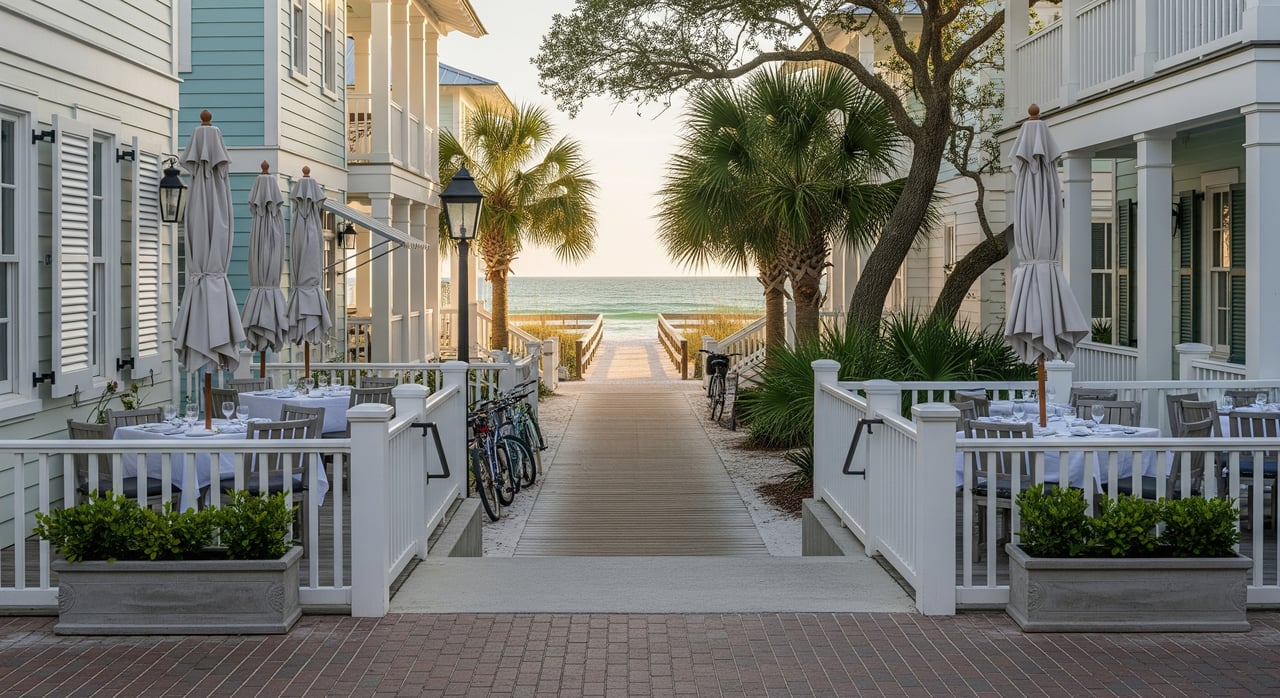
Seaside and Rosemary Beach were both planned for people on foot, but the experience feels different once you are on the ground. Seaside centers on an open town square with short blocks, pastel cottages, and a casual, public-facing heart that invites strolling. Rosemary Beach organizes its village core with tighter streetscapes, intimate pedestrian lanes, and architectural controls that create a more enclosed boutique-village atmosphere.
Both designs put homes close to cafés, shops, and the beach, which means most daily outings are a short walk. The main difference is how you experience those walks: Seaside’s open plazas and broad sightlines versus Rosemary’s narrower lanes and lively, intimate passages.
Distances and daily routines
In each town, you can walk from many residences to the central square in minutes. Shops, coffee, and dining cluster around the cores, so errands like grabbing breakfast or meeting friends rarely require a car. Both communities connect to the Timpoochee Trail, the paved multi-use path that runs along Scenic Highway 30A and links the corridor’s beach towns. That connection expands your walking and biking options and keeps most trips off the main road.
Beach access and crossings
Multiple designated public beach access points sit within or near both towns. In practice, that makes it easy to carry chairs and walk to the sand. Seasonal crowding can slow crossings and boardwalks during peak months, so your walk time may be the same but your pace changes. If frequent beach runs are part of your routine, consider how close your home sits to an access point and whether you have easy routes that avoid the busiest intersections.
Practical comfort and accessibility
Walkability is about comfort as much as distance. Look for ramped sidewalks, shaded seating, and restrooms near plazas if you have older guests or younger children in tow. Both villages provide pedestrian-priority streets and bike-friendly paths that support a relaxed, low-speed pace.
Dining and daily provisions
Seaside dining profile
Seaside is known for a lively café culture with casual eateries, beach-view patios, and quick-serve options that work well when everyone wants something different. Outdoor seating and pedestrian-oriented storefronts make it easy to stroll, browse, and dine without planning far ahead. Seasonal pop-ups and food trucks can add variety during holidays and summer.
Rosemary Beach dining profile
Rosemary Beach tends to concentrate boutique and upscale dining within its intimate village core. Hotel-restaurant venues and niche culinary concepts add to the experience, and the pedestrian network makes it simple to walk to dinner from nearby homes. The result is a refined dining cluster that appeals to guests seeking a polished, sit-down environment.
Seasonality, hours, and operations
On the Emerald Coast, many restaurants adjust hours around tourism cycles. Year-round living is very doable, but you should expect fewer late-night or weekday options outside peak season. In both town centers, limited curb space for deliveries and waste pickup is an operational reality, which can influence service hours and contribute to short, predictable traffic peaks around opening and closing times.
Groceries and essentials
Daily dining is walkable, but most full-service groceries, pharmacies, and larger-format services are located off 30A in nearby hubs. Plan on short drives or bike trips for weekly provisioning, and treat in-village dining as a lifestyle bonus rather than a complete replacement for errands.
Getting there and getting around
Driving and parking
Seaside and Rosemary Beach both sit on Scenic Highway 30A with access to US-98. The corridor is a two-lane scenic road that experiences notable congestion on peak-season weekends and holidays. Town centers were intentionally designed with limited on-street parking to prioritize pedestrians, so parking can be tight during busy periods. Check current rules for public lots, paid parking, and any resident permit policies, which can differ by community.
Airports and travel times
Two commercial airports commonly serve 30A travelers: Destin–Fort Walton Beach (VPS) and Northwest Florida Beaches International (ECP). Typical drive times to many 30A destinations are often around 1 to 1.5 hours depending on traffic and season. Always verify real-time estimates, especially on arrival and departure days.
Bikes, shuttles, and ride-hailing
The Timpoochee Trail is a major asset for moving around without a car. Seasonal shuttle services and private community shuttles may operate during peak months, and ride-hailing apps are available but can be limited by demand with higher fares during busy periods. Many owners and guests keep bikes on hand to make short trips quick and predictable.
What it means for buyers and sellers
How walkability and dining influence value
Proximity to a walkable town center, cafés, and the beach is a proven demand driver. Properties within short walking distance of village amenities often command premium pricing and attract strong interest from both personal-use buyers and vacation guests. The specific relationship between a home and its nearest plaza or beach access can materially affect desirability.
Short-term rentals and community rules
Both Seaside and Rosemary Beach sit in a vacation rental–heavy market, but permissions and policies vary. Before you buy, confirm Walton County rules, permit requirements, occupancy limits, and any applicable taxation. Also review HOA covenants and community policies for each neighborhood, including parking, noise, and design rules that may affect rental operations.
Insurance, flood, and elevation
Near-beach properties often fall within FEMA flood zones and require flood insurance along with hurricane and windstorm coverage. Elevation, compliance with current building codes, and mitigation features can significantly influence premiums. Review FEMA flood maps, elevation certificates, and insurance quotes as part of your due diligence so you can compare true ownership costs across locations.
Maintenance and architectural standards
Pedestrian-focused cores often feature smaller lots and shared common areas, which can shift your maintenance profile compared to larger parcels. HOA fees, common-area care, and landscaping standards are important budget items. In Rosemary Beach, architectural controls and design covenants are a core feature of the community and should be understood before planning any renovations or additions.
Seasonality and lifestyle fit
Peak-season energy is part of the appeal of both villages. It also changes the day-to-day rhythm. Expect fuller sidewalks, longer wait times, and higher ride-hailing demand during holidays and summer. If you value a quieter stay, consider location within the community, setback from the busiest plazas, and access to less-trafficked beach paths.
Quick decision guide
- Choose Seaside if you want an open town square experience, frequent casual dining, and iconic New Urbanist streets that showcase the 30A vibe.
- Choose Rosemary Beach if you prefer an intimate village core, cohesive architecture, and a higher concentration of boutique dining within a compact footprint.
- Choose either if you value a place where you can walk or bike daily, reach the beach without driving, and connect to the Timpoochee Trail for car-light living.
- For investors, prioritize proximity to the village core and beach access, clarity on HOA and county rental rules, and realistic assumptions about seasonal rates and occupancy.
- For end users, weigh how often you plan to visit in peak months and how comfortable you are with parking dynamics, wait times, and event schedules.
Next steps
You have two excellent options along 30A that deliver strong walkability, thoughtful planning, and immediate access to Gulf life. The right choice comes down to the street character you prefer, your typical dining routine, and whether you want a quieter side street or direct adjacency to the village hum. If you are buying or selling a premium home in Seaside or Rosemary Beach, a local, senior-broker-led advisor can help you compare micro-locations, ownership costs, and rental potential with clarity.
Ready to find your fit on 30A or position your property for a successful sale? Text or Call Us — Start Your 30A Conversation with The Morar Group.
FAQs
Which town is more walkable for everyday errands on 30A?
- Both are very walkable within their cores. Seaside feels more open around its town square, while Rosemary Beach offers intimate pedestrian lanes and tight-knit retail streetscapes.
How do dining options compare between Seaside and Rosemary Beach?
- Seaside leans into casual cafés and quick-serve spots around its square, while Rosemary Beach concentrates more boutique and upscale concepts within a compact village core.
What should I expect for parking in peak season?
- Parking is limited by design in both town centers. During holidays and summer, plan for full on-street spaces, consider biking or walking, and check each community’s current rules for public lots or paid options.
How practical is car-free living for groceries and essentials?
- Dining is very walkable, but most full-service groceries, pharmacies, and larger services are off 30A. Expect short drives or bike trips for weekly essentials.
How far are the nearest airports to Seaside and Rosemary Beach?
- Destin–Fort Walton Beach (VPS) and Northwest Florida Beaches International (ECP) typically run about 1 to 1.5 hours by car depending on traffic and season. Always verify current drive times.
What should investors know about short-term rental rules?
- Confirm Walton County regulations, permits, occupancy limits, and taxes, then review each HOA’s covenants for parking, noise, and rental policies before underwriting potential income.