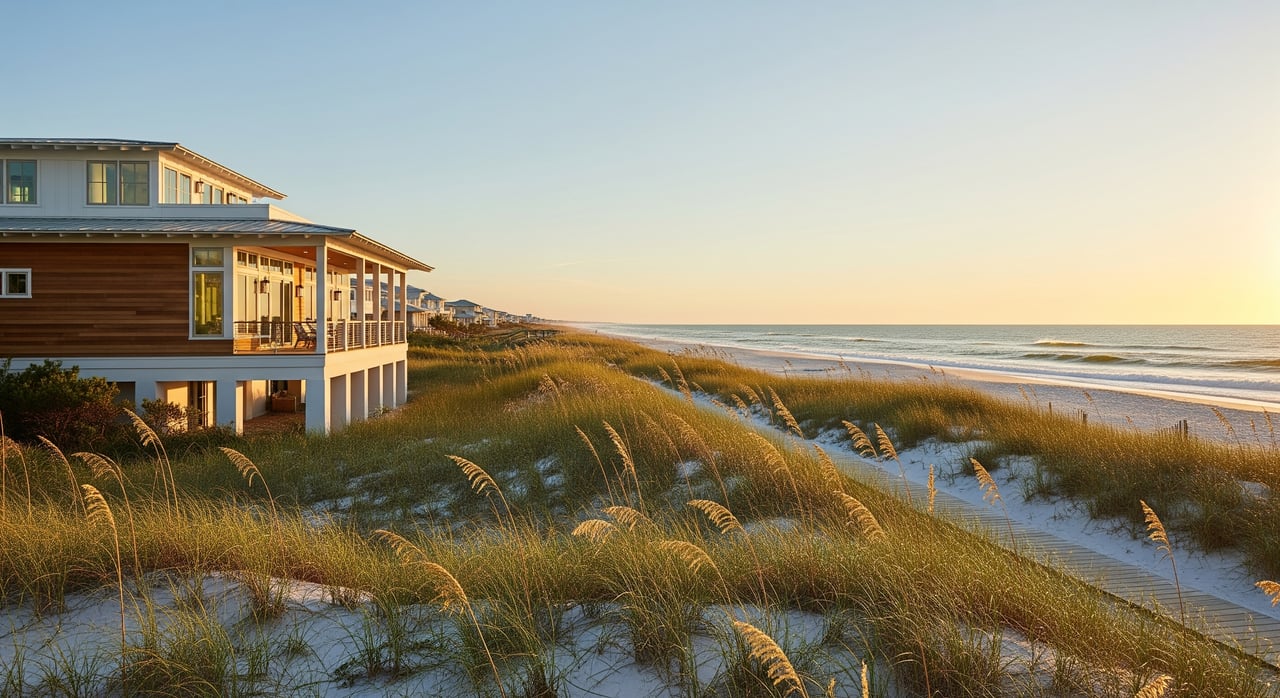
Looking at a gulf-front lot in Inlet Beach and wondering how far back you can build? You are not alone. Setbacks along 30A can feel confusing because several agencies and rules overlap, and the shoreline itself is always changing. In this guide, you will learn what a gulf-front setback actually means, how state and county rules interact, and the practical steps you can take to protect your plans and your investment. Let’s dive in.
What a gulf-front setback means
A gulf-front setback is a required distance landward from a coastal reference line where construction is limited or restricted. The reference line might be mean high water, a dune vegetation line, an official Coastal Setback Line, or the state’s Coastal Construction Control Line. Setbacks exist to protect dunes and public access and to reduce damage from erosion and storm surge.
On 30A, there is no single, fixed number that applies to every lot. Setbacks are parcel specific and can change over time as the shoreline shifts. That is why you want a current survey and written confirmation from the county and state before you rely on any estimate.
The rules on 30A are layered
Gulf-front parcels in Walton County are often governed by three layers of rules at the same time: federal floodplain rules, state coastal construction limits, and local county setbacks and dune protections. Each layer is independent. You might be landward of one line but still limited by another.
Florida’s CCCL and why it matters
The Florida Department of Environmental Protection administers the Coastal Construction Control Line (CCCL). If any part of your lot or planned work is seaward of the CCCL, you will need a state permit and you may face design limits. The CCCL is not the same as a county setback. A property can be landward of the CCCL and still be subject to county dune setbacks, or vice versa.
Walton County local setbacks and dune protections
Walton County’s Land Development Code sets local building setbacks, protects dune systems, and regulates activities in sensitive coastal zones. Local rules can reference features like the dune crest, dune vegetation, or the toe of the dune. County staff can help you interpret exactly which setbacks apply to a specific lot and how they interact with state lines.
FEMA flood zones and building code
Most gulf-front parcels fall in Special Flood Hazard Areas mapped by FEMA. Many sites are in V zones that face wave action, while some are in AE zones with defined Base Flood Elevations. Your flood zone affects design, elevation, and insurance. The Florida Building Code then sets structural, elevation, and wind standards your plans must meet within those zones.
How setbacks affect what you can build
Setbacks influence where a home can sit, how big it can be, and what features you can add. New construction seaward of certain lines can be limited or prohibited. Additions and decks may face extra scrutiny. If a structure is already seaward of a line, repairs or expansions can be restricted.
Rebuildability is critical. Lenders and insurers look at whether a damaged home can be rebuilt to current standards and permits. If rebuilding is uncertain, financing can be harder to secure and resale value can be affected. Before you write an offer or list a home, you want a clear picture of what is allowed today and what would be allowed after a storm.
Insurance, flood zones, and real costs
If your property is in a Special Flood Hazard Area, most lenders will require flood insurance. Premiums are usually higher in V zones, especially for structures that cannot meet elevation and foundation requirements. Elevation Certificates help insurers price risk and help you compare options.
Construction on the Gulf often means elevated living areas, pile foundations, breakaway walls, and hurricane tie-downs. These features add cost, so your pro forma for a new build or remodel should account for them. Windstorm coverage requirements and roof standards can also influence premiums and project budgets.
Shoreline armoring and dune work
Hardening the shoreline with seawalls, bulkheads, or revetments is tightly regulated. On many stretches of the Florida Gulf coast, shoreline armoring is discouraged or restricted without state and often federal permits. Where it is allowed, conditions and mitigation may apply. Armoring can also affect neighboring properties and public trust resources, so approvals are not guaranteed.
Dune systems are protected because they buffer storm surge and support beach health. Activities that disturb dune vegetation or change dune form are often limited. Expect careful review of any dune walkover or crossover design.
Public access, easements, and privacy
Some gulf-front parcels include recorded easements for public beach access, dune crossovers, conservation, or beach restoration. These easements can limit where you build, how you fence, and how you landscape. A title search and review of recorded plats can reveal rights that affect day-to-day use and long-term plans.
Your due‑diligence checklist
Before you close on a 30A gulf-front property in Inlet Beach or list one for sale, gather and verify the following:
- A current, certified boundary and topographic survey that shows mean high water, dune crest and toe, vegetation line, and all existing improvements.
- An official determination of the property’s location relative to the Florida CCCL and any other state coastal lines.
- Walton County zoning classification, official setback lines, and a written permit history or interpretation letter from Planning & Development.
- FEMA Flood Insurance Rate Map panel, flood zone designation, and any existing Elevation Certificate.
- Copies of prior building permits, certificates of occupancy, and any state or federal permits for shoreline work.
- A title search for recorded easements, encroachments, or conservation restrictions that affect the parcel.
- Recent aerial imagery and available shoreline change information to understand erosion or accretion trends.
- Records of beach renourishment or dune restoration projects and any associated assessments.
- Professional reviews: a licensed coastal engineer for shoreline risk, a local surveyor, and a permitting specialist or land-use attorney if you plan significant work.
- Lender and insurance pre-qualification, including preliminary flood and wind quotes based on likely elevations and construction type.
Smart steps for sellers on 30A
If you are preparing to list a gulf-front home, anticipate buyer questions about rebuildability and insurance. Pull your permit history, Elevation Certificate, and any CCCL or county determinations ahead of time. A new survey that clearly marks dune features and improvements can speed diligence and boost buyer confidence.
Consider commissioning a pre-listing consultation with a local surveyor or coastal engineer to frame what is possible for remodels or additions. Packaging these materials with your listing helps serious buyers move quickly and reduces surprises during escrow.
When a variance might make sense
Variances exist, but they are discretionary. Near the beach, you will need to show hardship and consistency with environmental protections. Approval is never guaranteed, so plan conservatively and do not price or design a project that depends on a variance. If you do pursue one, bring a cohesive team with site-specific surveys, engineering, and code analysis.
From idea to permit: a simple path
Use this streamlined path to reduce risk and keep your project on track:
Start with a coastal survey. Order a boundary and topo survey showing mean high water, dune features, and existing improvements.
Confirm CCCL status. Determine whether your site lies landward or seaward of the state line and what that means for permits.
Meet with Walton County. Request a pre-application meeting to identify setbacks, required permits, and likely conditions early.
Align your design. Have your architect and structural engineer design for the correct flood zone, elevation, and wind loads.
Gather supporting reports. Elevation Certificates, soils reports, and any coastal engineering opinions belong in the package.
Apply for permits. Submit county building permits and, if required, state CCCL permits. Add federal permits if dune or in-water work is proposed.
Secure insurance and lending. Obtain preliminary quotes and lender approvals tied to your final elevations and foundation type.
Common misconceptions to avoid
- “There is one setback distance for all of 30A.” In reality, setbacks are site specific and can change with updated surveys and shoreline movement.
- “If I am landward of the CCCL, I am clear.” Local dune setbacks or features may still limit your options.
- “I can rebuild exactly where I am after a storm.” Rebuilding must meet current codes, flood zones, and permitting constraints.
- “A seawall will solve erosion.” Armoring is tightly regulated and may not be allowed, and it can create issues for neighbors and beaches.
Why local expertise matters on 30A
Gulf-front property is a legacy asset, but it comes with specialized rules and higher operating costs. The right team helps you understand what you can build, how to insure it, and how to position it for resale. Senior-broker guidance, paired with trusted surveyors, engineers, and permitting specialists, can save months of time and protect value.
If you are weighing a purchase in Inlet Beach or preparing to sell along Scenic Highway 30A, we can help you navigate survey work, county and state reviews, and buyer expectations with clarity and discretion. Ready to talk through your lot or home and map a plan? Connect with The Morar Group to start a focused, confidential conversation.
FAQs
What is a gulf-front setback on 30A?
- It is a required distance landward from a coastal reference line where new construction or certain activities are limited to protect dunes, public access, and reduce storm risk.
Does the Florida CCCL apply to my Inlet Beach lot?
- Possibly; parts of Walton County fall within the state’s Coastal Construction Control Line, and you should obtain an official determination for your specific parcel.
How far back from the water can I build in Walton County?
- There is no one-size-fits-all distance; setbacks are parcel specific and must be confirmed by current surveys and county and state reviews.
Can I get a variance to build closer to the Gulf?
- Variances are discretionary and difficult near beaches; assume approval is uncertain and design your project to meet existing setbacks first.
What do FEMA V zones and AE zones mean for my home?
- V zones face wave action and require elevated foundations and specific construction; AE zones have a Base Flood Elevation; both affect design and flood insurance costs.
Can I install a seawall to prevent erosion on my property?
- Shoreline armoring is tightly regulated and often restricted; whether it is permitted depends on location and approvals that may include state and federal permits.
Who enforces coastal setbacks and permits on 30A?
- Walton County enforces local setbacks and building permits; the state enforces CCCL and coastal permits; FEMA governs flood mapping and insurance requirements.